
The short version
- Name the material, not just the room: granite, marble, quartz, travertine, engineered wood, black stainless, coated glass.
- Pass on the installer’s or manufacturer’s care instructions and any product you prefer or want kept off a surface.
- Point out etching, scratches and worn finish before the visit, so nobody mistakes damage for dirt.
- Sealing, honing, refinishing and specialty floor care sit outside a cleaning visit.
Why the crew needs finish notes
One kitchen in Sugar Land or Richmond can hold half a dozen finishes: a granite perimeter, a marble island, stainless appliances, a tile backsplash and wood or wood-look flooring. Each tolerates different products and different amounts of water. We bring supplies suited to everyday household surfaces, eco-friendly products included, but the right choice for a particular stone or floor depends on information only you have.
Two facts help most: what the material is, and what the person who installed it said about care. A receipt, a warranty card or an installer’s care sheet usually answers both. If you are not sure, say so in your notes, and we can talk it through before the visit rather than guess on the day.
Natural stone counters and backsplashes
Natural stone countertops differ from one another more than they look. Granite and quartzite are hard and are usually sealed. Marble, limestone and travertine are softer and sensitive to acids, so even a mild acidic product can leave a dull mark. Engineered quartz is not natural stone at all, and its maker publishes its own care guidance.
Every visit includes “Wipe down all countertops and backsplash”, and a deep clean adds “Scrub grout between backsplash tiles”. When you book, tell us:
- Which counters are natural stone and which are quartz, solid surface or laminate.
- Whether the stone has been sealed, and roughly when, if you know.
- Any spots that are already etched or dull, so nobody tries to scrub them out.
- Products the installer told you to use, and any they told you to avoid.
For a cleaning service, cleaning natural stone countertops comes down to removing residue without harming the stone. Sealing or resealing it is a separate job, and so is honing or polishing out etch marks; both belong to a stone specialist.
Hardwood, engineered wood and wood-look floors
Floors appear on every checklist, as “Sweep and mop floors” in the kitchen and bathrooms and “Vacuum carpets or mop hard floors” in the bedrooms. For wood, the question that matters is how much water reaches the boards, so what the floor is made of matters more than how it looks.
Tell us which floor you have
- Solid hardwood, finished on site or prefinished at the factory.
- Engineered wood, a real wood layer bonded over a plywood core.
- Laminate or luxury vinyl plank, which only looks like wood.
- Wood-look tile, which is tile and handles water the way tile does.
Tell us how it should be cleaned
If the flooring maker or your installer named a cleaner, or warned against steam, wax or oil soaps, put that in your notes. If you keep a particular floor product, leave it out with a label and mention it when you book. Point out any boards near the dishwasher, a doorway or a patio door that have already lifted or cupped.
Hardwood floors that need screening, recoating or refinishing need a flooring contractor. Stripping, waxing and burnishing are specialty floor care, which we do not offer.
Stainless steel and other appliance finishes
Standard visits wipe appliance exteriors. A deep clean adds “Polish stainless steel surfaces”, and that is where the finish matters. Brushed stainless steel has a grain, and polishing with it looks better than polishing across it. Some appliances that look like stainless are something else:
- Black stainless and some fingerprint-resistant finishes are a coating over metal. Tell us if yours are, and pass on the maker’s care note.
- Panel-ready appliances wear cabinet fronts, which follow the cabinet’s care rather than the appliance’s.
- Older stainless with scratches or rust spots will not look new after polishing, so point them out beforehand.
Glass shower doors and the tile around them
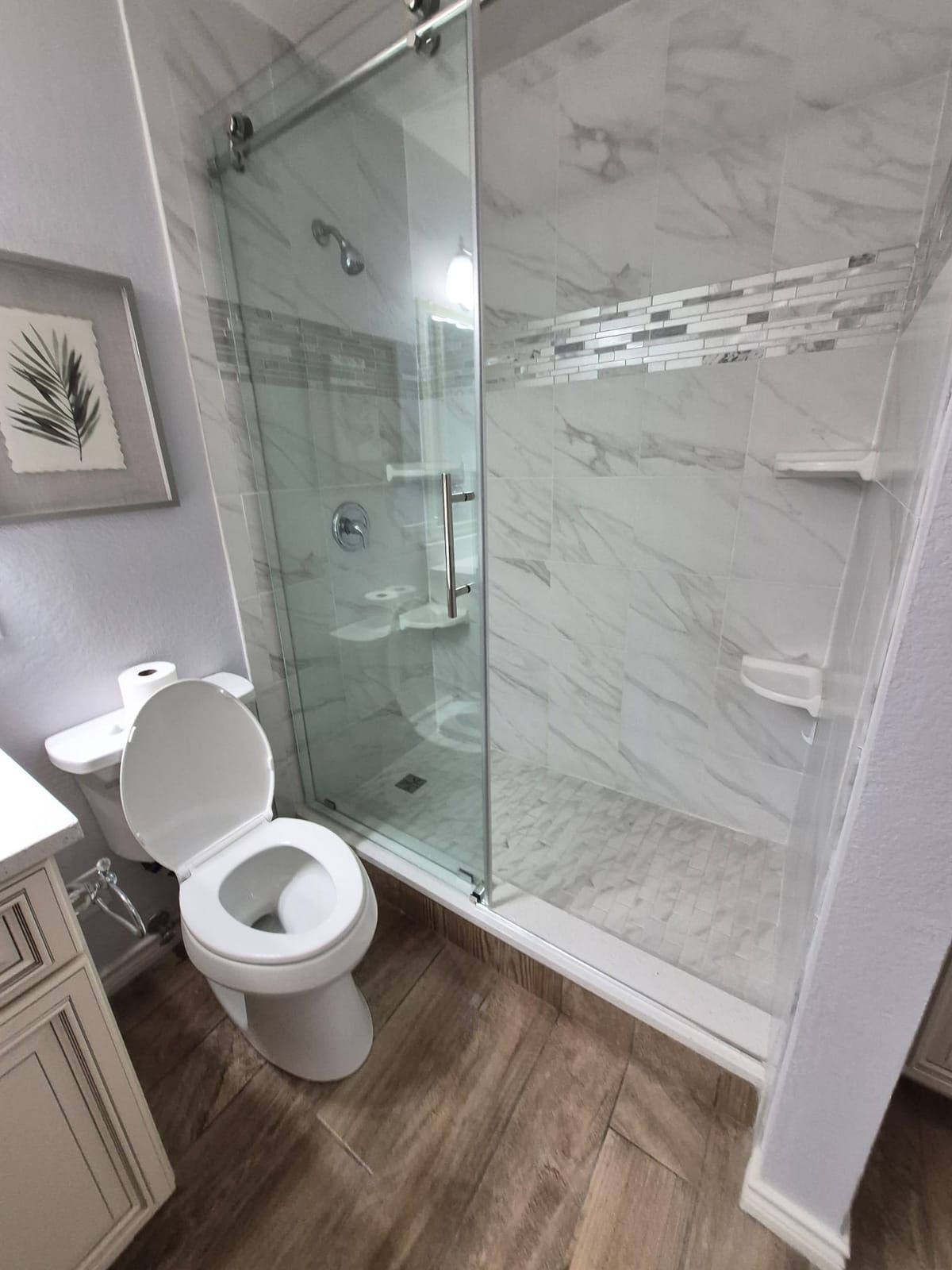
The standard list includes “Clean glass shower door or curtain”, and the deep list adds “Wash shower curtain or treat glass doors” along with descaling shower heads and faucets. Hard-water scale builds up on glass shower doors over time, and a thick layer is the kind of buildup a deep clean is meant for.
Tell us if the glass has a factory protective coating, and whether you want a product kept off it. Glass that is cloudy from etching, rather than from scale, does not come clear with cleaning. If you are unsure which you have, mention it so expectations are set before the visit, not after.
Natural stone shower walls follow the same rules as stone counters: name the stone and pass on the care instructions.
How to pass the notes along
Put finish notes in your booking notes or quote request, in a form the crew can take in within a minute. A short list by room works well. For example:
- Kitchen: perimeter counters granite, sealed last spring; island marble with two dull rings near the sink; no acidic products on either.
- Floors: engineered oak downstairs, damp mop only; tile in the bathrooms and laundry room.
- Appliances: black stainless refrigerator and range.
- Primary bath: coated glass door; travertine shower walls.
Update the notes whenever something changes, such as a newly sealed counter or a refinished floor, and tell us if you are on a recurring plan so the change reaches every visit. To get started, book online or ask for a free quote and add your notes there.
What sits outside a cleaning visit
A cleaning visit keeps finishes clean. It does not repair, restore or protect them, and these jobs belong to other trades:
- Sealing or resealing natural stone and grout.
- Honing or polishing marble to remove etch marks.
- Screening, recoating or refinishing hardwood.
- Stripping, waxing or burnishing floors.
- Carpet shampooing or steam cleaning.
- Removing deep scratches from stainless or glass.
Knowing the boundary helps with timing. If a stone specialist is coming to reseal, book the cleaning before that visit, or ask the specialist how long the sealer needs before the surface is wiped again.