
The short version
- Have the approximate floor area and the count of restrooms, toilets, urinals and sinks ready.
- Know your floor types and where foot traffic is heaviest.
- Decide when the crew can work and how they will get in and set the alarm.
- Say who buys paper, soap and liners, and point out rooms that are off limits.
- After the walkthrough come the scope, the frequency and the quote; nothing is booked online.
What the walkthrough is for
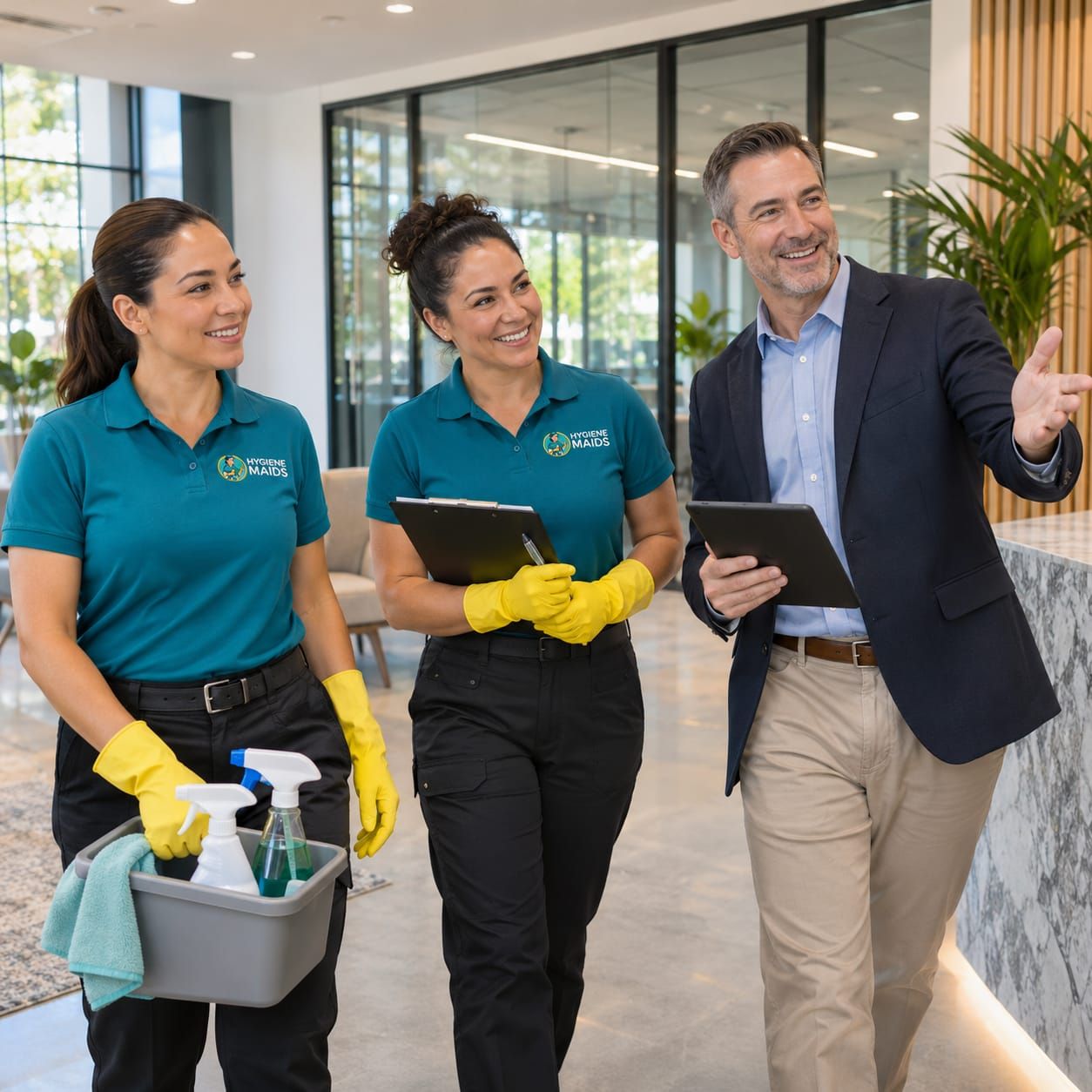
Commercial cleaning is not booked from a form. It is scoped from a walkthrough or a detailed description and then quoted. The walkthrough is where we see the space, ask about the daily routine and agree what the crew will and will not touch. Properties larger than the biggest floor-area band, and common-area programs for multi-unit buildings, are quoted after one.
Bring the person who knows the building day to day, such as an office manager or facilities lead, and the person who approves the budget if that is someone else. A Stafford professional office, a Sugar Land showroom and a flex space with a front office raise different questions, but the preparation below covers most of them.
The numbers to have ready
Most of the cleaning quote rests on a handful of counts. None of them has to be exact, but each one should be close.
Floor area
An approximate square footage is enough. It is usually in the lease, on a floor plan or in a building listing. Pricing uses floor-area bands, so a close figure puts you in the right band without anyone measuring.
Restrooms and fixtures
Count the restrooms, then the toilets, urinals and sinks in each one. Restroom fixtures are serviced on every visit, so their number shapes the time each visit needs more than the size of the restroom does.
Rooms and work areas
- Private offices and open workstations.
- Conference and training rooms.
- Breakrooms and kitchenettes, and the appliances in them.
- Reception and waiting areas.
- Storage rooms, and whether they are cleaned at all.
People
How many people work on site, and roughly how many visitors or customers pass through on a normal day. Traffic decides how quickly floors, entry glass and restrooms need attention again.
Floors and the paths people take
Name each floor type and where it is: carpet in private offices, vinyl plank in corridors, tile in restrooms, sealed concrete in a warehouse front, stone in a lobby. Then trace the busiest routes, usually from the entrance to reception, the restrooms and the breakroom, because those strips set how floors are planned.
Routine vacuuming and mopping is part of janitorial work. Stripping, waxing and burnishing are specialty floor care, which we do not offer, and neither is carpet shampooing or steam cleaning. If your floors need those, plan them with a flooring contractor and tell us the dates so routine visits fit around them.
Hours, security and alarms
Many workplaces want cleaning done when nobody is working. Come to the walkthrough knowing:
- The hours the space is in use, and any times it must be left alone.
- How often you want the crew, anywhere from once a month up to every weekday.
- How the crew gets in: keys, access cards or a code, and who issues them.
- The alarm system, whether the crew can have its own user code, and who the monitoring company calls.
- Any building rules, if you are a tenant in a shared building, such as vendor registration.
For a suite in a multi-tenant building, the building’s access rules come first; office suite cleaning in shared buildings covers that split. Retail stores and showrooms are cleaned outside opening hours, so have your opening and closing times ready.
Consumables and supplies
The crew brings its own cleaning supplies and equipment. Consumables are different: the paper towels, toilet tissue, hand soap and trash liners your staff and visitors use. Routine janitorial work restocks them when they are supplied, so the walkthrough should settle:
- Who buys them, and whether you already have a supplier.
- Where the stock is kept, and whether that closet is locked.
- Which dispensers you have, so refills fit them.
- Who is told when stock runs low.
Special areas to point out
Every building has rooms that need a rule. Walk us through them during the visit rather than leaving them to be found on the first night:
- Off limits. Server rooms, records rooms and locked executive offices.
- Handle with care. Reception glass, display cases, artwork and electronics on desks.
- Shared. A breakroom used by two tenants, or a conference room the building owns.
- Outside what we clean. Medical or clinical treatment rooms, commercial kitchens, and industrial or hazardous process areas. In a warehouse or flex space, the front office, restrooms and breakroom are cleaned and work areas swept; process areas stay out of scope.
What happens after the walkthrough
The walkthrough is the start of the process, not a booking. From there it runs in this order:
- Scope. The areas, tasks and exclusions agreed on the walkthrough become the written scope.
- Frequency. You choose how often the crew comes. More frequent visits cost less per visit, so frequency and budget are weighed together.
- Quote. The price follows facility type, floor-area band and frequency, with any add-ons priced per visit. The bands are on our commercial price table.
- Start. Once you accept, the first visit is set for a day both sides agree.
- Adjust. After the first visits, raise anything the scope missed so it can be revised.
To arrange a walkthrough, request a free quote with your address and the numbers above, or call (346) 586-2912. Our recurring commercial cleaning page explains how ongoing programs run once the scope is set.